

Google used to send customers to businesses. Then it put more of the decision on its own pages: maps, flights, hotels and ads. Companies that depended on Google to be found had to compete (and pay) for attention on Google itself. The route to the customer became an intermediary with its own interests.
AI takes the next step. It can hear what a customer needs, compare options, recommend a business and increasingly act on the customer’s behalf. Taking the retail analogy, the AI platform doesn’t just show the shelf. It can choose what goes on it.
The Bunnings Buddy connects what it knows online with what its people know in store.
Buddy helps customers plan projects, find products and check local price and stock. In store, Team Member Assist gives staff quick access to product and operating knowledge; the Bunnings app helps customers locate products. A general LLM can explain how to build a shelf. Bunnings can connect that advice to its range, what’s available nearby and the person who can help.
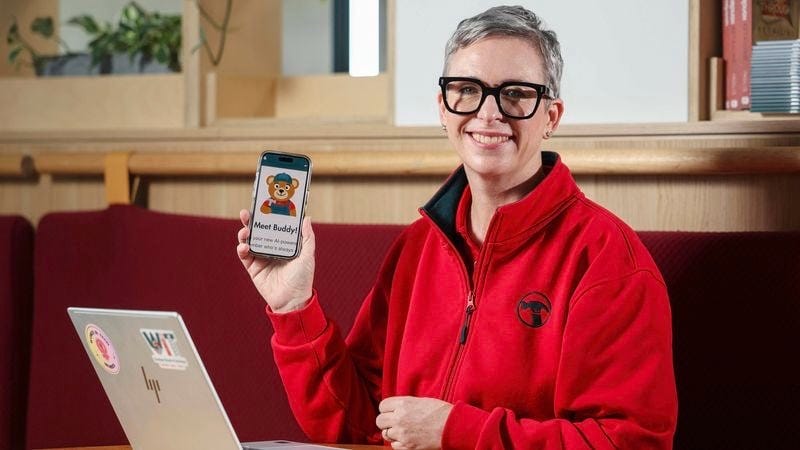
Bunnings doesn’t need to hide every how-to. Its advantage is connecting useful advice to the right product, local stock and human help. Bunnings reports that customers using Buddy converted at more than twice Bunnings’ online rate, with higher average order value.
Every CEO has a retail shelf decision: what information and access will you give outside AI platforms, and what will you keep part of your own customer experience? If AI can solve the customer’s problem without your business, you may have handed over more than visibility. You may have handed over your role.