

Apple is avoiding the AI infrastructure race because it expects intelligence to commoditise.
Its strategy is to control where AI is consumed, not where it is trained.
CEOs copying hyperscaler AI investment patterns may be solving the wrong problem.

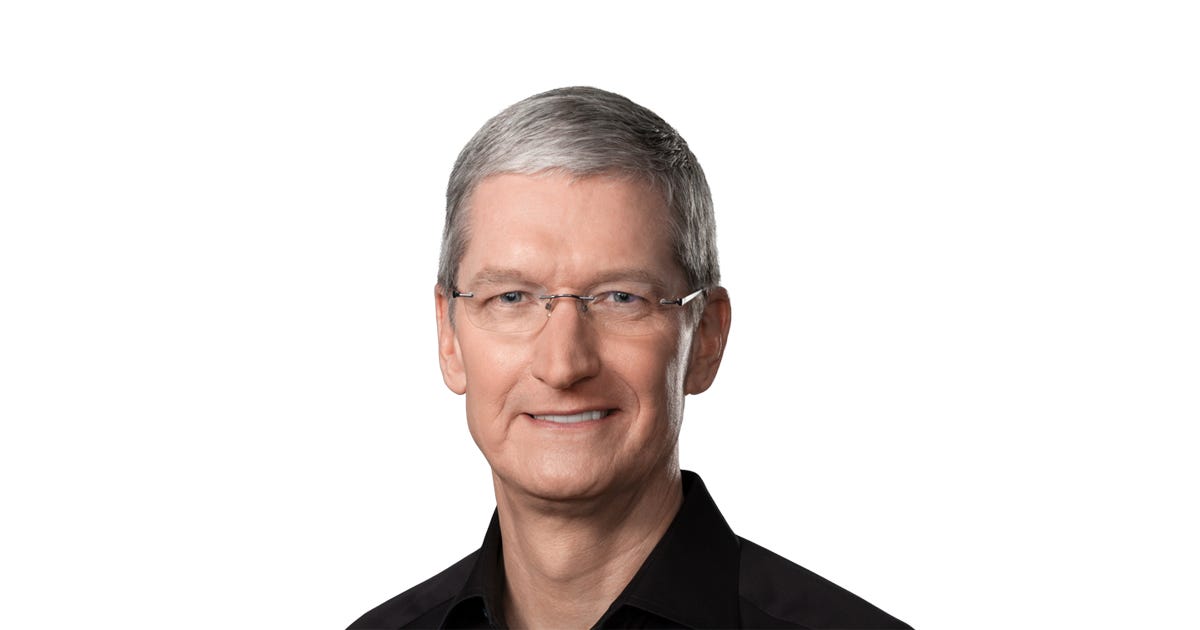
Tim Cook, CEO Apple
For the past year, the AI narrative has been dominated by one number: infrastructure spend.
Microsoft committing tens of billions to GPU clusters.
Amazon expanding datacentres at record pace.
Google vertically integrating chips, models and cloud capacity.
Meta pouring capital into large-scale training infrastructure.
And then there is Apple.
No massive public GPU expansion.
No frontier-model arms race messaging.
No hyperscale infrastructure announcements dominating headlines.
The market reads this as hesitation.
That interpretation assumes the AI race will be decided in the datacentre.
Apple appears to believe the decisive layer sits somewhere else entirely.
The sentence that explains Apple’s position
Apple is not trying to win the intelligence race.
Apple is trying to control where intelligence is consumed.
That difference determines where the long-term profit pool sits.
Every AI strategy answers one hidden question
Beneath the headlines about models and compute sits a structural choice:
Will value concentrate in building intelligence?
Or in controlling how intelligence is used?
Most of the industry is investing as if intelligence itself will remain scarce.
Apple is positioning as if intelligence will become abundant.
If intelligence stays scarce, infrastructure owners dominate.
If intelligence becomes abundant, distribution owners dominate.
Apple is betting on the second outcome.
Apple has executed this pattern repeatedly
Apple rarely wins by inventing categories first.
It wins by entering once the underlying technology stabilises and then dominating the integration layer where behaviour and margin concentrate.
Smartphones existed before the iPhone.
Tablets existed before the iPad.
Smartwatches existed before Apple Watch.
Wireless earbuds existed before AirPods.
Others proved the technology.
Apple controlled the user environment.
AI fits naturally into this playbook.
The architecture most companies assume
Most enterprise AI strategies implicitly assume:
User → Cloud → Giant Model → Answer
In this world:
compute scale determines capability
infrastructure ownership determines advantage
AI becomes a capital-intensive utility industry
If this holds, hyperscaler spending makes perfect sense.
Owning intelligence becomes equivalent to owning oil reserves.
The architecture Apple appears to be building instead
Apple’s direction suggests something different:
User → Device intelligence first → Cloud escalation only when necessary
This is not primarily a technical optimisation.
It is an economic positioning.
Because once intelligence runs primarily on-device:
latency collapses
privacy becomes structurally defensible
switching costs move into hardware
performance links to device capability
upgrade cycles accelerate
AI stops being a cloud service.
AI becomes a feature of the ecosystem.
Strategic truth
The company that owns the model earns usage revenue.
The company that owns the interface owns the customer.
Apple has always preferred the second position.
Why the hyperscaler spending race may actually strengthen Apple
Apple does not need to build the best model.
It only needs multiple companies competing to supply one.
If OpenAI, Google, Anthropic, Meta and others continue racing:
model quality rises
prices fall
supply expands
intelligence commoditises
Apple can integrate the strongest available capabilities at the OS layer.
Without funding the training war.
The infrastructure players absorb the capital risk.
Apple captures the behavioural surface.
The uncomfortable implication hiding underneath this
If Apple is correct, then most companies may already be repeating the same mistake enterprise IT teams made in the early cloud era.
They are optimising for capability first…
…and discovering dependency later.
Apple is building its AI architecture to avoid that trap entirely.
Most companies haven’t even mapped where their trap might be yet.
And that gap is where the real strategic risk now sits.
