

Many leadership teams begin planning by looking at where they are today.
Current revenue. Current customers. Current headcount. Current constraints. Current market conditions.
Then they ask a seemingly reasonable question:
What should we do next?
The problem is that starting from the present often produces incremental thinking.
If your planning process begins with today’s constraints, today’s resources and today’s assumptions, it becomes difficult to imagine a fundamentally different future. Strategic discussions drift toward optimisation rather than transformation.
The result is familiar.
A larger sales team.
A few new product features.
Some operational improvements.
A slightly better version of the business that already exists.
Useful, but rarely game-changing.
The most ambitious organisations take a different approach.
They start with the destination.
Then they work backwards.
The Principle Behind The Framework
Stephen Covey described this idea decades ago in The 7 Habits of Highly Effective People.
Begin with the end in mind.
The concept sounds simple.
Yet organisations struggle to apply it consistently because they immediately jump from vision to execution. They discuss where they want to go and then rush into project plans, budgets and quarterly objectives.
What is often missing is the bridge between the future and the present.
Amazon built an entire management process around that bridge.
They call it Working Backwards.
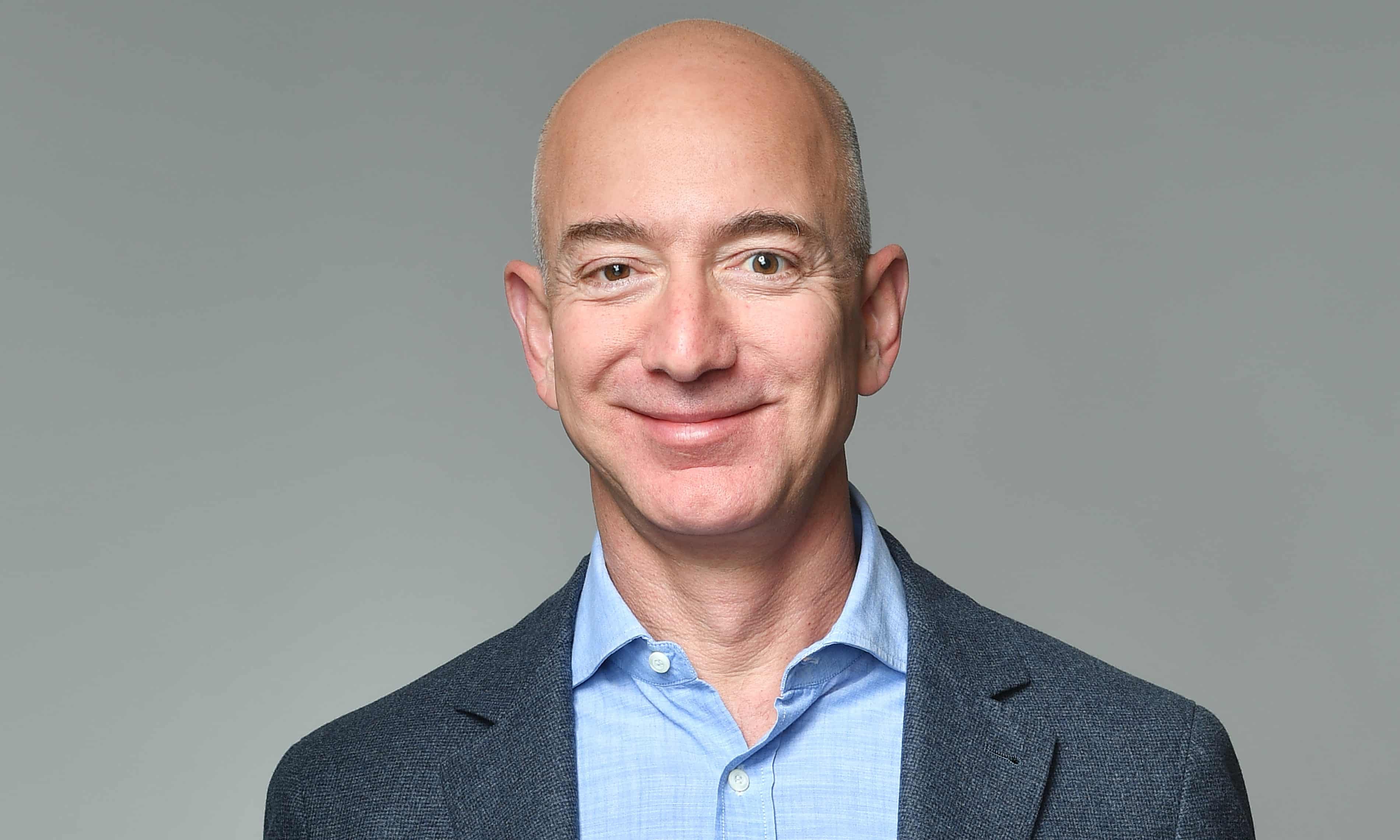
Amazon’s Working Backwards Framework
Amazon’s approach became famous because it reverses the sequence most companies use.
Rather than starting with resources and asking what can be built, teams start with the customer outcome and ask what must be true to achieve it.
Before launching a product, teams write the future press release.
Before discussing implementation, they describe success.
Before debating priorities, they define the outcome customers will experience.
Only after everyone agrees on the destination do they begin planning the journey.
The process forces a different conversation.
Instead of asking:
“What should we build?”
Teams ask:
“If we were wildly successful, what would customers be saying?”
That shift sounds subtle.
In practice, it changes everything.
Why Strategic Planning Fails
Many strategic planning exercises become exercises in resource allocation.
Which initiatives should we fund?
Which markets should we prioritise?
Which projects should we accelerate?
Those are important questions.
But they assume leadership has already agreed on what success looks like.
Often they haven’t.
The absence of a clearly defined future creates a hidden problem. Every executive carries a different mental model of where the organisation is heading.
The CEO imagines market leadership.
The CFO imagines margin expansion.
The Head of Product imagines innovation leadership.
The COO imagines operational excellence.
None of these goals are wrong.
But they are not necessarily the same.
As a result, organisations become highly productive while remaining partially misaligned.
People work hard.
Resources get allocated.
Projects get delivered.
Yet progress feels slower than it should because the organisation is pursuing multiple versions of success simultaneously.
Working Backwards solves this problem by forcing leaders to describe the destination in enough detail that everyone can see it.
The Future Press Release
The first step is deceptively simple.
Imagine it is 36 months from now.
Your company has exceeded expectations.
Customers love the product.
The business is thriving.
Competitors are paying attention.
Industry analysts are writing about your success.
Now write the press release announcing that outcome.
Not the strategy.
Not the roadmap.
The result.
This exercise forces leaders to articulate success in concrete language rather than vague aspirations.
One of the fastest ways to do this is with AI.
Future Press Release Prompt
Act as a Senior Strategic Advisor using Amazon’s Working Backwards framework.
Company:
[describe company]
Customer:
[describe target customer]
Initiative:
[describe the product, service, capability, market expansion, acquisition, transformation or strategic initiative being considered]
It is now 36 months in the future.
This initiative has been extraordinarily successful and has exceeded all expectations.
Write the press release announcing this success.
Include:
1. The Headline
What achievement is being announced?
2. Customer Impact
What problem was solved and why do customers care?
3. Business Impact
What measurable outcomes were achieved?
4. Competitive Impact
How did this change the company’s position in the market?
5. Executive Quotes
Create realistic quotes from the CEO, customers and partners explaining why this matters.
6. The Surprise
What outcome exceeded expectations?
Make the press release specific, credible and measurable.
The FAQ Test
Amazon doesn’t stop with the press release.
The next step is often more valuable.
Teams write the FAQ.
The reason is simple.
A future vision is easy to agree with.
The details are where strategy becomes real.
The FAQ forces leaders to confront difficult questions before committing resources.
What assumptions must be true?
What obstacles might derail us?
What would investors question?
What would customers challenge?
What capabilities are missing today?
Many strategic plans fail because organisations become emotionally attached to the vision without rigorously testing the assumptions underneath it.
The FAQ exposes those assumptions early.
Future FAQ Prompt
Act as an Executive Team Advisor.
Below is our future press release.
[Paste press release]
Generate the 20 toughest questions that customers, investors, executives and board members would ask about achieving this outcome.
For each question:
Explain why it matters.
Identify the biggest risk or assumption.
Suggest what capabilities or investments would be required to address it.
What experiment could we run in the next 90 days to validate it?
Highlight any assumptions that appear unrealistic or unsupported.
The Reverse Roadmap
Many organisations naturally think forwards.
Today leads to tomorrow.
Tomorrow leads to next quarter.
Next quarter leads to next year.
Working Backwards flips the process.
Once the destination is clear and the assumptions have been tested, leaders can begin mapping the path in reverse.
Starting from the future often reveals priorities that are invisible when planning from the present.
Capabilities that seemed optional become essential.
Projects that looked urgent become distractions.
Investments that felt risky become obvious.
The roadmap becomes less about activities and more about milestones that must exist for the future state to become possible.
Reverse Roadmap Prompt
Act as a Chief Strategy Officer.
Our initiative is:
[Describe initiative]
Our future press release is:
[Paste press release]
Work backwards from this future state.
Identify:
What must be true 24 months before success?
What must be true 12 months before success?
What must be true 6 months before success?
What must be true in the next 90 days?
For each milestone, identify:
Decisions required
Capabilities required
Risks to manage
Metrics to track
Focus on outcomes rather than tasks.
The Real Value Of Working Backwards
Most leaders assume strategy is about deciding what to do.
The best leaders understand that strategy is first about deciding what success looks like.
Once that becomes clear, many decisions become easier.
Opportunities can be evaluated against the destination.
Investments can be prioritised.
Trade-offs become obvious.
Alignment improves.
Focus improves.
Execution improves.
The future becomes a filter for the present.
This is the deeper lesson behind Covey’s principle.
Beginning with the end in mind is not about vision boards or motivational slogans.
It is about creating enough clarity about the future that today’s decisions become easier to make.
Amazon simply turned that idea into a repeatable management system.
The Question Every Leadership Team Should Answer
If your company became extraordinarily successful over the next 36 months, what would the press release say?
If your leadership team cannot answer that question clearly, there is a good chance you are planning from the present instead of leading from the future.
If you found this useful, share it with a CEO or executive who is in the middle of a strategic planning cycle.
Used this framework today, writing the 3‑year press release first actually forces you to stop hand-waving and be clear on what you’re trying to build. Once that’s real, working backwards just becomes common sense. Way more useful than most strategy frameworks I’ve seen.