

Adobe Summit Sydney had all the language now attached to enterprise AI.
Agents. Orchestration. Brand visibility. AI teammates. Personalisation at scale. Humans and machines. Customer experience flywheels.
Some of that matters. Some of it is just vendor language doing what vendor language does. But the most useful story of the day was not the most futuristic one.
It was RACQ.
Not because RACQ had the flashiest AI demo. It didn’t. RACQ was useful because its story showed what enterprise AI usually looks like once it leaves the keynote stage and has to survive inside a real organisation.
Less magic. More plumbing. More trust.
Trust comes first
RACQ is a large Queensland member organisation operating across roadside assistance, insurance, banking, batteries, solar and travel. It sits in the kind of category where customer experience is not a slogan. People turn to RACQ when something matters.
That makes its AI story more useful than a polished demo.
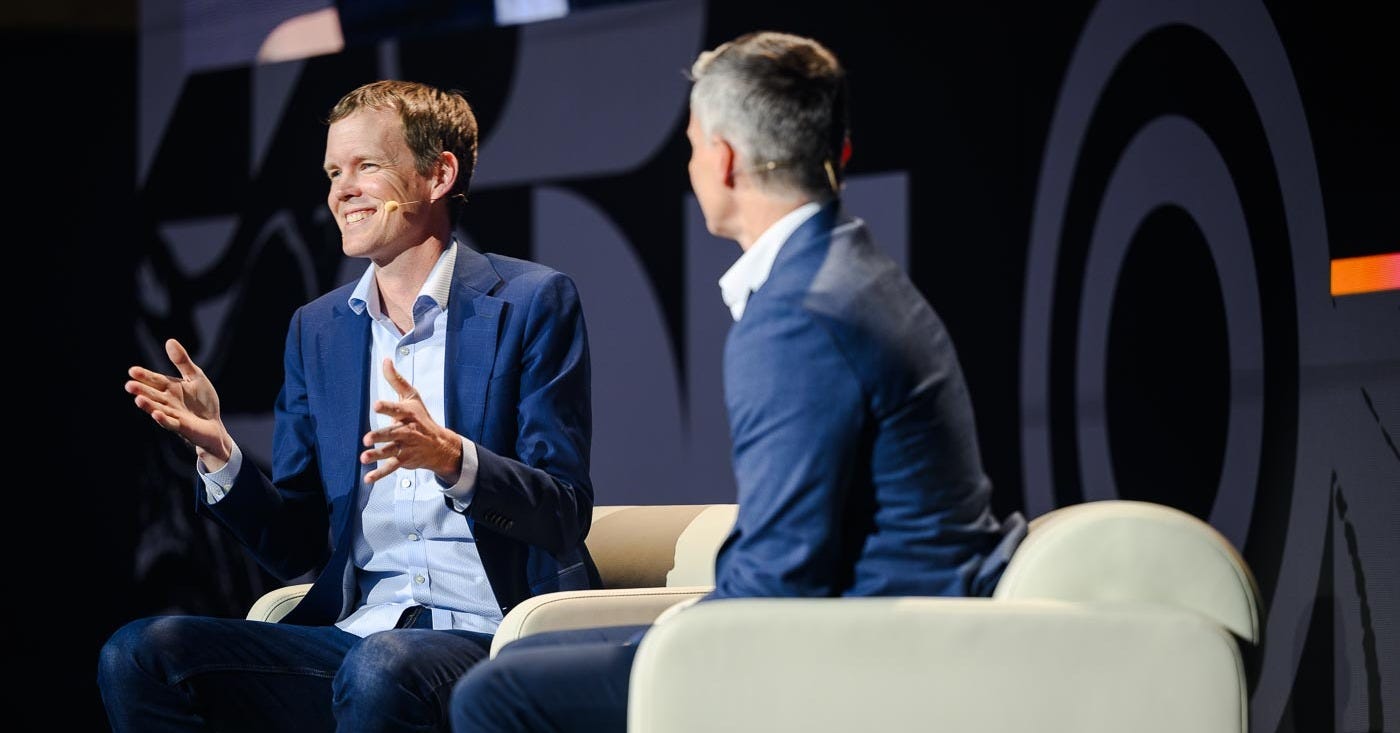
Tim Cochrane, RACQ’s General Manager of Marketing, Membership and Digital, kept coming back to the same point. RACQ is a brand built on trust. Whatever marketing method it uses, that trust is non-negotiable.
That is a better starting point for AI than most of the conference language.
The first question is not what the technology can do. The first question is what the brand can do without weakening the trust that makes the technology useful in the first place.
The problem was operational
RACQ’s issue was not that it lacked access to clever tools. The problem was more basic. Its systems were manual, fragmented and siloed.
The organisation was trying to serve members across multiple products, but did not have the kind of unified customer understanding needed to do that well. In plain English, it was hard to know enough about the member, at the right moment, across the right part of the business.
That is not a model problem. It is an operating problem.
This is the part most AI strategy conversations skip over. They start with what the technology can now generate, automate or personalise. The better executive question is what the organisation is ready to let it touch.
If the data is fragmented, the workflows are brittle and the customer view is incomplete, adding AI does not create a smarter organisation. It just creates faster movement through a messy one.
The boring work paid back
The strongest RACQ proof point was not an agent. It was a customer data story.
Cochrane talked about the work to create a better view of the customer. That sounds dull until you hear what it changed.
Some RACQ households had been receiving multiple copies of the same glossy magazine. In the worst cases, one household could receive four copies.
That is not an AI problem. It is a customer data problem. It is also the kind of problem that tells you whether an organisation is actually ready for more advanced automation.
If you cannot work out that one household should not receive four copies of the same magazine, you probably should not be talking too confidently about AI agents managing the customer journey.
The payoff was not just less waste. RACQ could also better identify people who had sought an insurance quote but did not transact, then re-engage them with more relevant timing and context.
Cochrane said that helped drive a significant increase in conversion. He also said RACQ had planned for payback over roughly two and a half years, but achieved it in about nine months from go-live.
That is the kind of AI-adjacent story executives should care about.
Not because the number is enormous. Because the mechanism is understandable. A customer shows intent, the business recognises that intent, the business responds with better timing and relevance, and conversion improves.
That is not science fiction. It is better execution.
The AI ad disclosure matters
There was another RACQ detail that says a lot about where AI marketing is heading.
RACQ has created video advertising using AI-generated visuals, built around Australian animal characters Sam and Reg. The writing, production and voice work still involved humans, but the visuals were generated using AI.
The important detail is that RACQ clearly discloses this in the ad: “Visuals generated using AI.”
That may sound like a small compliance note. I do not think it is.
Before the generative AI era, RACQ had used CGI. That is also computer-generated, of course. But CGI and AI-generated visuals now carry different expectations for audiences, regulators and brand teams.
CGI usually implies a controlled production process involving artists, animators, rendering, compositing and approvals. AI-generated visuals introduce a different trust question because the synthetic layer is more automated, more scalable and less intuitively understood by the audience.
That does not make AI-generated advertising wrong. It means the brand has to think harder about disclosure.
For RACQ, that matters because trust is not a decorative brand value. It is central to the business. If members believe the organisation is using synthetic media without being straight with them, the production saving may not be worth the reputational cost.
That is the practical AI question for brands. Not just whether AI can make something cheaper or faster, but whether it can be used in a way that still feels honest.
The agent comes later
Adobe’s event framing was heavy on agents and orchestration. RACQ’s story points to a more useful sequence.
First, fix the customer data and workflow foundations. Then improve the speed and relevance of engagement. Then layer in more advanced AI and automation where the organisation has enough trust, governance and context to use it safely.
The agent is not the strategy.
The operating model is the strategy.
A lot of executive AI work still starts in the wrong place. It asks what the agent can do, which tasks it can complete, and which workflows it can automate.
Those are useful questions, but they are not the first ones.
The first questions are more basic. What does the organisation know about the customer? Which systems hold that knowledge? Which teams act on it? Which approvals slow it down? Which customer moments are commercially meaningful? Which data is trusted enough to drive action?
Only then does the agent matter.
The hidden trade-off
There is also a harder executive question underneath the RACQ story.
RACQ has entered a five-year strategic partnership with Adobe and Deloitte Digital. The official announcement talks about a Lighthouse model, early access to Adobe AI capabilities, and a governance and learning framework. That is the formal version. The practical version is simpler: RACQ is making a serious long-term bet on a major enterprise stack and the services required to make it work.
That may be the right decision. Large organisations often need serious platforms and serious partners to make change stick.
But CEOs should not pretend the trade-off disappears because the word AI is attached.
When AI becomes embedded in customer data, content workflows, member engagement, advertising, approvals and decisioning, the vendor is no longer just selling software. It is helping shape how the organisation operates.
That can create leverage. It can also create lock-in.
The right question is not whether that is good or bad in the abstract. The right question is whether the organisation understands what it is standardising around, what it can still change later, and which capabilities it must own internally.

The lesson for CEOs
RACQ’s story cuts through the easiest version of the AI narrative.
Enterprise AI value does not begin with a chatbot. It does not begin with an agent. It does not begin with a demo that turns a prompt into a campaign.
It begins when an organisation can see enough of the customer, trust enough of the data, coordinate enough of the workflow and measure enough of the result to act differently.
It also begins with a clear view of what the brand will not compromise. For RACQ, that is trust. The method of marketing delivery can change, but the trust obligation cannot.
The companies that get value from AI will not be the ones with the most experiments. They will be the ones that turn AI into better operating discipline.
RACQ’s case is still early. The next test is whether the five-year partnership produces durable member value, not just better marketing execution or a cleaner technology stack.
But as a signal, it is useful.
The boring work is not the prelude to enterprise AI. It is enterprise AI.
Disclosure: Adobe invited me to Adobe Summit Sydney and covered travel and accommodation. Adobe had no editorial review or approval. I’m interested in practical AI stories, not vague transformation language or paid placement. Pitch your story here.