

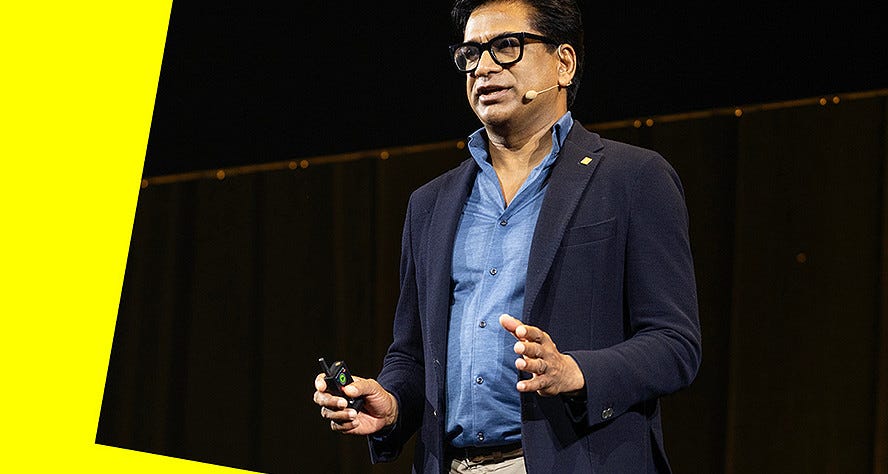
Commonwealth Bank expects around $400 million in gross productivity benefits from AI over the coming year. That’s a serious number, but I’ve been just as interested in what CBA is doing alongside it. The bank now has a Chief AI Officer and recently appointed its first Chief AI Scientist, whose remit includes machine learning, responsible AI and AI security.
It’s easy to see these as technology hires, but I think there’s something more interesting going on. CBA is expecting AI to remove a meaningful amount of work from the business while adding senior people around the AI itself. Those two things aren’t contradictory. They’re probably connected.
I’ve spent the past few years talking about which jobs AI might replace. We’re now starting to get a better look at the jobs it creates around itself, particularly as AI moves from helping people with their work to actually doing parts of the work.
If AI helps someone write an email, there isn’t much to govern. If it handles thousands of customer interactions, reviews documents, recommends actions or starts operating inside important business processes, someone needs to know whether it’s doing those things properly. Someone also needs to decide how far it’s allowed to go.
You can remove work without removing responsibility. In some cases, you may actually create more of it.
CBA isn’t the only large Australian company making these moves. Westpac has put data, digital and AI under a Group Executive reporting to the CEO and also has a Chief AI Officer. NAB has a Group Executive for Digital, Data and Artificial Intelligence. Qantas has put AI directly into the remit of its Group Chief Technology, AI and Transformation Officer.
The titles aren’t particularly important. What interests me is why these roles are appearing at all.
As AI does more work, companies need people who understand what it’s doing, where it should be used and where it shouldn’t. They need people who can deal with the messy territory between technology, risk, customers, regulation and commercial outcomes. Most importantly, they need someone who can be held responsible for what happens.
That’s quite different from the early idea that AI would simply make everyone a bit more productive.
Follow the hires
Telstra is probably the clearest example of where this is heading. Its AI systems have named owners, higher-impact uses receive additional review, and its oversight brings together people from technology, legal, privacy, cybersecurity, people and customer functions. There is also oversight at board level.
That might sound like governance plumbing, but there’s a practical reason for it. Once AI is doing real work, “the AI did it” obviously isn’t an acceptable answer when something goes wrong. Someone needs to own the outcome, just as they would if the work had been done by a person or team.
I suspect this is why we’ll see more of these roles, even as companies talk about reducing headcount elsewhere. AI can make some forms of labour less necessary while making a smaller number of people much more important. Those people won’t necessarily do the work themselves. They’ll decide what gets handed to machines, what stays with people and how the company knows the difference is working.
There’s a useful test in all of this. Pick an AI system doing something important in the business and ask who is responsible for its output. Not who bought the software or who built the model, but who owns what happens when it’s used.
If there’s a clear answer, good. If three people point at each other, or the answer is “technology”, you’ve learned something useful about how ready the organisation really is to scale AI.
That’s why I find CBA’s $400 million number and these new AI roles interesting together. The productivity number tells us AI is becoming economically meaningful. The hiring tells us companies are starting to work out what has to sit around it.
As AI takes on more of the work, the question of who owns that work doesn’t go away. It just becomes harder to ignore.
References
Commonwealth Bank
Commonwealth Bank appoints its first Chief AI Scientist — Commonwealth Bank, May 2026. Covers Professor Mary-Anne Williams’ appointment and her remit across machine learning, responsible AI, AI security and generative AI.
Done right, AI is ‘invisible’: meet Ranil Boteju, CommBank Chief AI Officer — Commonwealth Bank, May 2026. Covers Boteju’s role, including scaling AI safely across the bank.
Commonwealth Bank appoints Ranil Boteju as Chief AI Officer — Commonwealth Bank, November 2025. Original appointment announcement.
Cloud costs, token bills and the new discipline of corporate AI — The Australian, September 2026. Reports CBA expects AI-driven productivity benefits to reach approximately $400 million in the coming year.
Westpac
Westpac appoints Chief Data, Digital and AI Officer — Westpac, May 2025. Andrew McMullan was appointed to lead data, digital and AI, reporting to CEO Anthony Miller, with an explicit focus on responsible AI.
NAB
Pete Steel — Executive Leadership Team — NAB. Steel became Group Executive, Digital, Data and Artificial Intelligence in November 2025.
Qantas
Qantas Group Leadership — Qantas. Rachel Yangoyan was appointed Group Chief Technology, AI and Transformation Officer in December 2025, with accountability for technology, AI strategy, data and analytics, and technology-driven transformation.
Telstra
How Telstra governs AI: from ethics by design to a company-wide control plane — Telstra, April 2026. Covers named ownership of AI systems, the AI Risk Oversight Council, board oversight and Telstra’s Responsible AI control plane.
Reading this from the small-company side: a five-person team doesn't get a
Chief AI Officer. The role compresses into the founder, wanted or not.
And at that scale the pointing can't hide anywhere — it's usually one person
pointing at the tool. Which is why the honest question for a small team
isn't just who owns the output, but who decided the output was worth
shipping in the first place. When the answer is "the model seemed
confident," that's the small-business version of answering "technology."