

AI anxiety is not mainly about tools, but about professional identity losing its old foundations.
The real shift is from information scarcity to judgment, trust, and accountability.
Leaders must turn AI from a productivity toy into an operating model question.
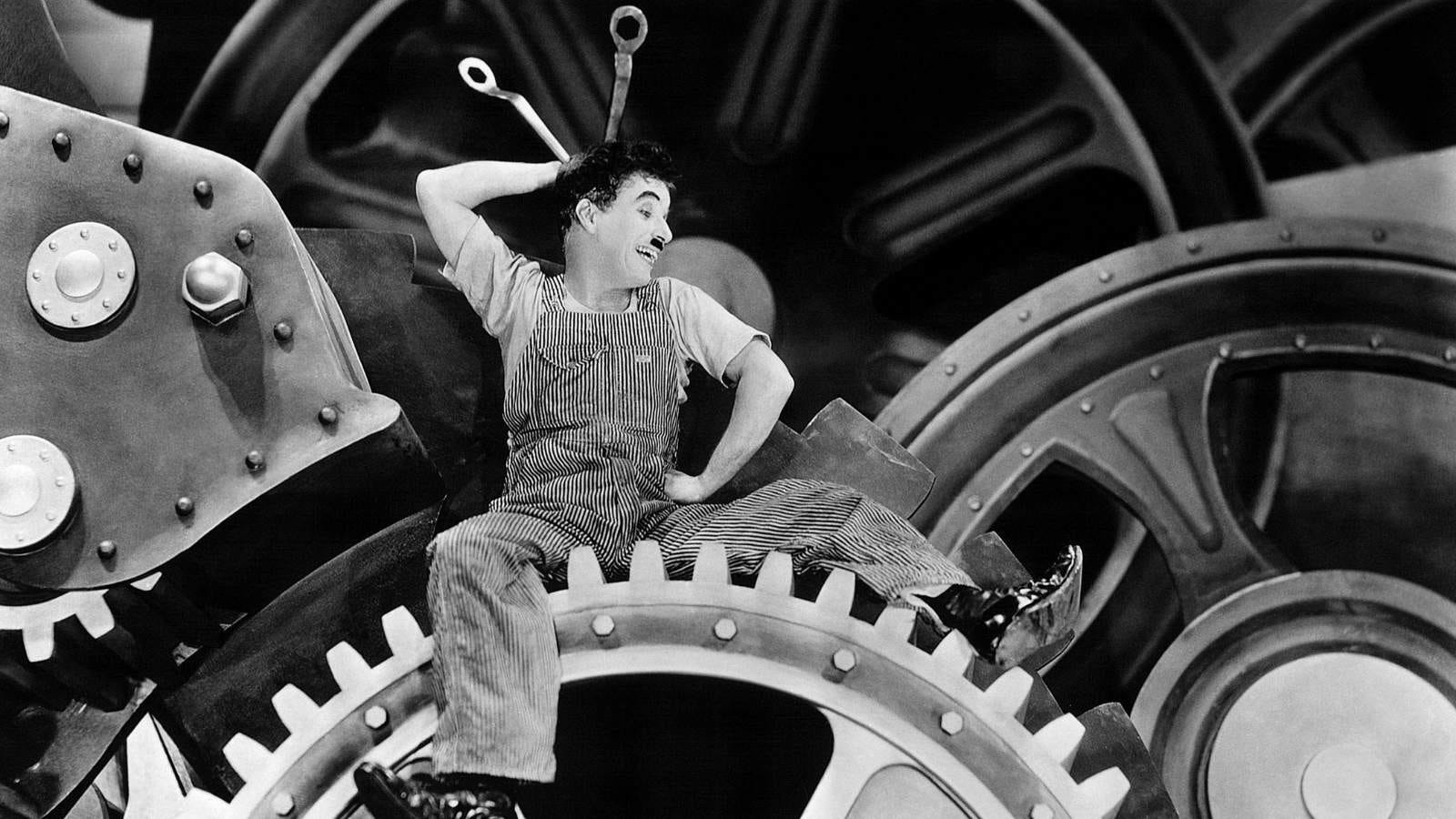
There is a particular silence that appears in leadership conversations when AI becomes real.
Not when it appears on a strategy slide beside phrases like “workflow automation” or “productivity uplift”. Not when someone demonstrates a chatbot in a boardroom. Not when consultants promise operational transformation.
The silence arrives when someone realises that a machine can now do part of the work they once believed made them valuable.
A senior marketer watches a campaign draft appear in thirty seconds. A lawyer sees a passable first review of a contract. A technologist watches software emerge from a prompt. A manager notices that reporting, synthesis, coordination, and follow-up are beginning to collapse into software. A graduate entering the workforce starts wondering whether the bottom rung of the career ladder still exists in the same form.
That is the moment the conversation changes.
People call these systems AI. Others call them Clankers. The term is partly tongue in cheek, partly useful shorthand for machines that feel mechanical, relentless, and increasingly embedded inside the work we used to think of as deeply human.
The hostility toward AI is not really about the technology itself.
It is about the fear of becoming unnecessary.
If this captures a conversation happening inside your organisation, share it with someone trying to lead through the noise.
For decades, professional value was built around scarcity. Scarcity of information. Scarcity of expertise. Scarcity of access. Scarcity of people capable of interpreting complexity and turning it into action.
Modern organisations were designed around that scarcity. We created layers to move information between teams. We created functions to protect specialised knowledge. We created approval chains to manage risk. We created management structures to coordinate work at scale.
Then the Clankers arrived and started attacking the bottlenecks.
Not perfectly. Not safely. Not without hallucinations, errors, or operational risk. But fast enough to expose which parts of work were genuine judgment and which parts were simply friction disguised as expertise.
That is why this technological shift feels different.
Earlier waves of automation mostly attacked muscle, movement, or calculation. AI reaches directly into cognition. It writes, summarises, analyses, codes, compares, classifies, and recommends. It enters the white-collar operating system itself.
This does not mean humans stop mattering. It does mean many humans are being forced to reconsider why they matter.
That is a much harder conversation than deciding which AI platform to deploy.
History gives us a useful pattern here, although not necessarily a comforting one.
The printing press did not destroy knowledge. It destroyed a monopoly over knowledge. Scribes were not irrational to feel threatened because their economic role, social status, and craftsmanship genuinely were under pressure. Yet the machine expanded access to ideas, accelerated literacy, and transformed the structure of society.
Photography created a similar disruption. Many painters feared art itself was becoming obsolete once machines could capture realism instantly. What actually happened was more interesting. Once cameras handled realism more efficiently, painters moved toward interpretation, emotion, abstraction, and perspective.
The machine changed where human value lived.
Calculators did not destroy mathematics. They reduced the value of manual arithmetic while increasing the value of reasoning and problem-solving.
The pattern is not that technology leaves everything untouched.
It is that technology changes where human value lives.
That pattern matters because AI is beginning to reshape the economics of knowledge work itself.
The strategic implication is easy to underestimate. AI is not merely another efficiency layer or software upgrade. It is a pressure test on the organisation’s theory of value.
If a process becomes dramatically cheaper and faster, what remains scarce? If generic knowledge work becomes abundant, what becomes premium? If first drafts are effectively free, what is actually worth paying for?
The answer is not more dashboards, more AI pilots, or more generated content.
The answer is judgment.
Judgment about what matters. Judgment about what is true. Judgment about what customers will trust. Judgment about which risks are acceptable and which are not. Judgment about where automation creates leverage and where human oversight remains essential.
This is where the Clanker conversation stops being a technology discussion and becomes a leadership discussion.
A machine can generate options, but it cannot own consequences. A machine can produce analysis, but it cannot carry accountability. A machine can accelerate execution, but it cannot decide what kind of organisation you are trying to build.
That remains human work.
Ironically, the AI era may increase the value of leadership while reducing the value of certain forms of management.
Many organisations have management layers that exist primarily to move information between systems, functions, and meetings. AI is beginning to compress that coordination premium. When reporting, synthesis, analysis, and follow-up become partially automated, some forms of organisational complexity start to look less necessary.
Peter Drucker spent decades warning that knowledge work would eventually force organisations to rethink management itself. AI may simply be accelerating the moment where information stops being the primary source of organisational value.

I explored this more directly in my earlier piece on management layers and AI compression, because the real organisational impact of AI is unlikely to come from chatbots alone. It will come from redesigning how decisions move through the system.
That does not make leadership less important.
It makes weak leadership easier to see.
The managers who create clarity, build trust, make decisions under uncertainty, and develop people become more valuable. The managers who mainly route information between meetings become harder to justify.
The same dynamic is beginning to appear across professional functions. AI will not eliminate legal judgment, but it may reduce the value of routine document review. It will not eliminate marketing, but it may reduce the premium on generic production work. It will not eliminate technology leadership, but it will change the economics of coding, support, and software delivery. It will not eliminate strategy, but it may expose how much “strategy” was simply expensive synthesis with little conviction attached to it.
The Clankers are not eliminating expertise.
They are exposing which expertise was genuinely scarce.
Where do you think AI genuinely reduces human value, and where does it force human value upward?
There is also a reason many people instinctively recoil from AI hype.
The evangelists often skip over the emotional reality of transition. They talk about leverage, automation, and productivity as though people are merely inefficient systems waiting to be upgraded. That language may work inside a spreadsheet, but it fails inside organisations made of human beings.
People do not work solely for income. They work for identity, status, usefulness, belonging, and dignity. When a machine suddenly performs something they spent years learning, the reaction is not purely economic.
It is personal.
That does not mean all resistance is correct. But it does mean the resistance is real.
Leaders who ignore that reality will fail, not because the technology is weak, but because transformation is social before it is technical.
This is where many AI initiatives will quietly stall. Not in procurement. Not in model selection. Not in vendor evaluation. They will stall in the middle of organisations, where people are close enough to understand the capability and senior enough to feel threatened by it.
The most exposed group may not be junior staff. It may be the professionals whose value historically came from coordination, translation, reporting, and information control. AI challenges all four simultaneously.

This is also why simplistic slogans like “AI will not replace you, but someone using AI will” feel incomplete. They contain some truth, but they miss the deeper structural shift underway.
The divide will not simply be between people who use AI and people who do not.
It will be between organisations that redesign around abundance and organisations that continue operating as though information scarcity still protects them.
Once knowledge work becomes partially abundant, the premium shifts. It shifts from production to perspective. From access to trust. From speed to judgment. From managing work to designing systems where better work can happen.
That is the deeper leadership challenge now.
Not adoption.
Discernment.
The organisations that benefit most from AI will not necessarily be the ones with the most tools. They will be the ones capable of redesigning work thoughtfully around the new economics of cognition.
They will ask better questions.
Where is knowledge trapped? Where are skilled people wasting time on low-judgment tasks? Where does AI reduce friction? Where does it increase risk? Where do customers still require deeply human trust and accountability?
Those are not technical questions.
They are operating model questions.
And beneath them sits a profoundly human question.
What kind of work should humans now be doing?
That is why the Clanker fear deserves more respect than it usually receives. Beneath the panic, cynicism, and online shouting sits a rational understanding that the old professional bargain is changing. Learn the system. Accumulate expertise. Become difficult to replace.
AI weakens parts of that bargain.
But it does not eliminate the need for humans.
It raises the standard for what human contribution must become.
The printing press forced society to rethink knowledge. Photography forced artists to rethink art. The internet forced companies to rethink distribution.
AI is forcing organisations to rethink human value itself.
Not philosophically.
Operationally.
Who decides? Who checks? Who carries accountability? Who earns trust? Who understands the customer deeply enough to know whether the machine is right, wrong, or merely plausible?
Those questions will matter far more than which model is marginally better this quarter.
The Clankers are here. They will improve. They will become more embedded, more ordinary, and eventually less interesting as technology. That is what powerful technologies do. They move from wonder to infrastructure.
The real question is what leaders build around them.
If organisations use AI to flood systems with more mediocre output, they will deserve the backlash. If they use AI to remove humans from decisions requiring accountability, they will create risk at scale. If they use AI to avoid thinking, they will become faster and dumber simultaneously.
But if they use AI to remove low-value friction, improve decision quality, expand capability, and move human attention toward higher-order judgment, then the story changes entirely.
The Clankers do not have to make us less human.
They may force us to become more deliberate about what only humans should do.
Disagree strongly? Good. Share it with your own view attached. The useful argument is not whether AI is good or bad, but where human value moves next.
I am genuinely interested in the considered disagreement here.
If you believe AI diminishes human value, make the case. If you think leaders are still underestimating the opportunity, make that case too. If you think the real risk is not the technology itself but the way organisations deploy it, I suspect you are closer to the truth than either extreme.
The worst outcome is not disagreement.
The worst outcome is letting the Clankers arrive while leaders continue asking small questions.
The big question is not whether AI can do more work.
It can.
The big question is what kind of work humans should now be doing.