

Most AI strategy decks make progress look too clean.
The future state is always beautifully connected. Customer data flows into one platform. Journeys are mapped. Content is personalised. Dashboards show what worked. AI helps the team decide what to do next.
That is the dream.
The problem is that most organisations do not start there. They start with limited budgets, small teams, legacy systems, imperfect integrations, scattered data and more work than people.
That is why RMIT University is a useful case.
Not because every company is a university. It is useful because RMIT shows a more realistic pattern for AI adoption: make progress in chunks, learn fast, and stop waiting for the perfect system to arrive.
The perfect system is the trap
The phrase “right person, right message, right channel, right time” has been around long enough to lose most of its meaning.
It sounds sensible, but it hides the operating burden. To actually do it, a company needs data it can trust, journeys it can understand, channels that connect, content that can be produced, and measurement that shows whether anything changed.
That is a lot of machinery.
For leadership teams, the mistake is treating that machinery as something that must be solved all at once. The architecture diagram becomes the strategy. The integration plan becomes the excuse. The transformation program becomes so large that the business waits too long before anything useful changes.
Perfect integration sounds responsible. Often it is just a polite way to delay the first hard choice.
Constraints sharpen the question
RMIT’s context is relevant because it did not sound like a blank-cheque transformation story.
It had a big job to do and real constraints around money and people. That is the normal condition for most organisations. The work keeps growing, but the team and budget do not grow at the same speed.
That changes the adoption question.
A constrained team cannot afford to ask, “How do we build the perfect AI-enabled customer journey?” It has to ask, “Where can better data, better timing or better automation change an outcome now?”
That is a much more useful question.
It forces the team to look for leverage. Where is the journey too complex to manage manually? Where is the organisation guessing? Where would a more relevant intervention matter? Where can a small improvement be measured?
That is how AI adoption becomes practical.
RMIT gives the proof point
RMIT’s student journey is a useful example because it is long, messy and high-stakes.
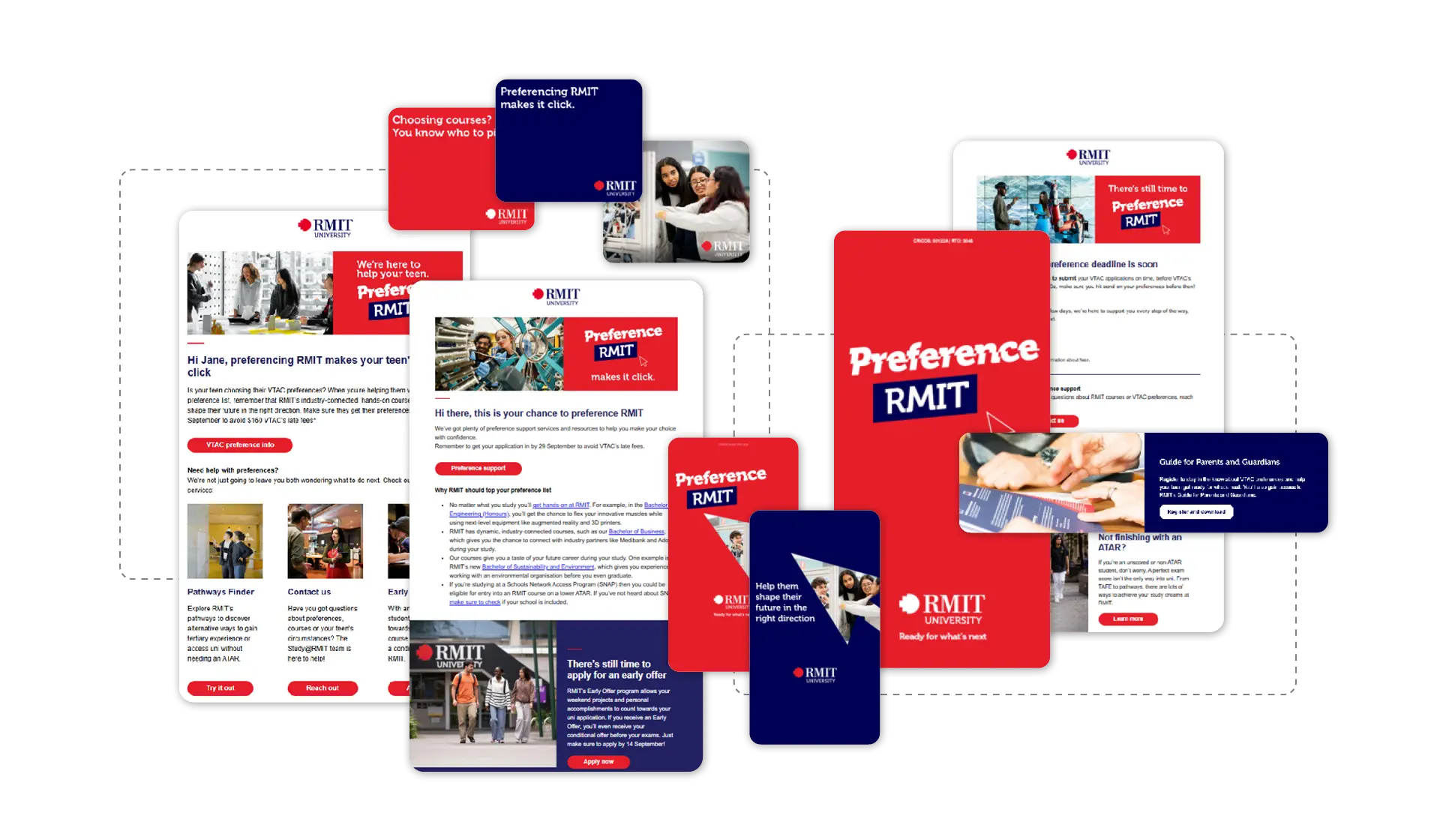
Adobe’s case study says RMIT serves more than 90,000 students from over 190 countries, with journeys stretching from Year 10 through to final enrolment. It also points to disconnected touchpoints across open days, brochures and social channels.
That is not a simple funnel. It is a decision system.
The student is not always the only decision-maker. Parents matter. Geography matters. Study area matters. Timing matters. Confidence matters. Channel preference matters.
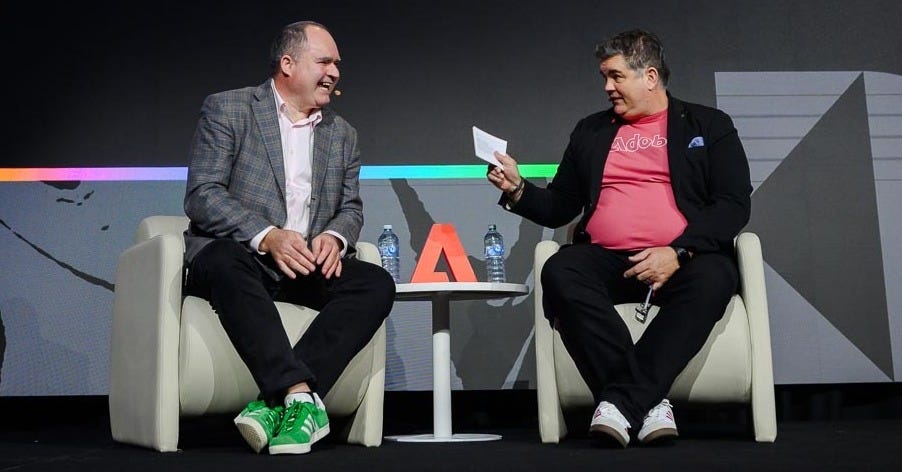
At Adobe Summit Sydney, RMIT talked about dozens of touchpoints and hundreds of segments. That is not just a marketing ambition. It is an execution burden.
The useful question is not whether AI can create more personalised content. The useful question is whether the organisation can understand the next few moments that matter, and act on them without overwhelming the team.
The first win was not magic
The official case study says RMIT implemented a data foundation in 15 weeks, improved website speed by 29%, and created a dashboard to track prospective student journeys across channels. It also says a personalised offer banner achieved a 23 per cent enrolment conversion rate.
Take the vendor framing with the usual caution. The sequence is still worth paying attention to.
The first useful work was not magic. It was foundation work.
Better first-party data. Better journey visibility. Faster web experience. A clearer view of where prospective students were engaging and where they were dropping off.
Then came a targeted intervention: a banner for students who had received an offer but had not yet enrolled.
That is a good example because the moment is specific. The audience is clear. The desired action is clear. The measurement is close enough to the behaviour to matter.
That is very different from vague personalisation at scale.
Early access can be a strategy
One underappreciated lesson from RMIT is that constrained organisations may need to be early, not late.
Being an early adopter is not just about chasing novelty. Used carefully, it can be a leverage strategy. It can give a smaller team access to capability, learning, vendor attention and influence it might not otherwise get.
There is a cost to that.
Early tools have rough edges. Integrations are imperfect. The team has to tolerate ambiguity while still running the business. Not every beta will be worth the time.
But waiting has a cost too.
By the time everything is mature, packaged and perfectly documented, better-resourced competitors may already have built the internal muscle. They may already know which workflows matter, which data is useful and which claims do not survive contact with the customer.
For constrained teams, the choice is not between perfect and imperfect. It is between learning now or waiting for certainty that may arrive too late.
Integration is never finished
The most honest part of the RMIT lesson is that martech integration is never really done.
That is not a criticism of one vendor. It is the nature of modern operating systems inside organisations. Every company has platforms, data sources, channels, approvals, legacy processes and teams that work around the official architecture.
AI does not arrive into a clean environment.
That means the practical question is not, “Is everything integrated?” It is, “Which chunk is valuable enough to improve next?”
This is where leadership discipline matters. Without discipline, the organisation either chases shiny tools or disappears into a multi-year integration program. Neither is ideal.
The better path is to pick a piece of work where the outcome matters, the data is usable, and the improvement can be measured. Then move to the next one.
The lesson for CMOs
RMIT’s story is not really about higher education.
It is about sequencing.
Most organisations will not build the perfect AI stack before they need to make progress. They will have to make progress while the stack is still messy, the integrations are still imperfect and the team is still learning what AI can actually change.
That is not a failure. It is the normal adoption path.
The CMO job is not to demand a perfect AI architecture before anything moves. It is to force a useful sequence.
Where does better data change a decision? Where does better timing change behaviour? Where does automation reduce manual work without reducing judgment? Where can the organisation prove value before scaling the pattern?
That is how constrained teams make AI useful.
Not by waiting for everything to connect.
By choosing the next useful chunk.


Disclosure: Adobe invited me to Adobe Summit Sydney and covered travel and accommodation. Adobe had no editorial review or approval. I’m interested in practical AI stories, not vague transformation language or paid placement. Pitch one here.